
Home › League Structures & Formats
The expanded Club World Cup format
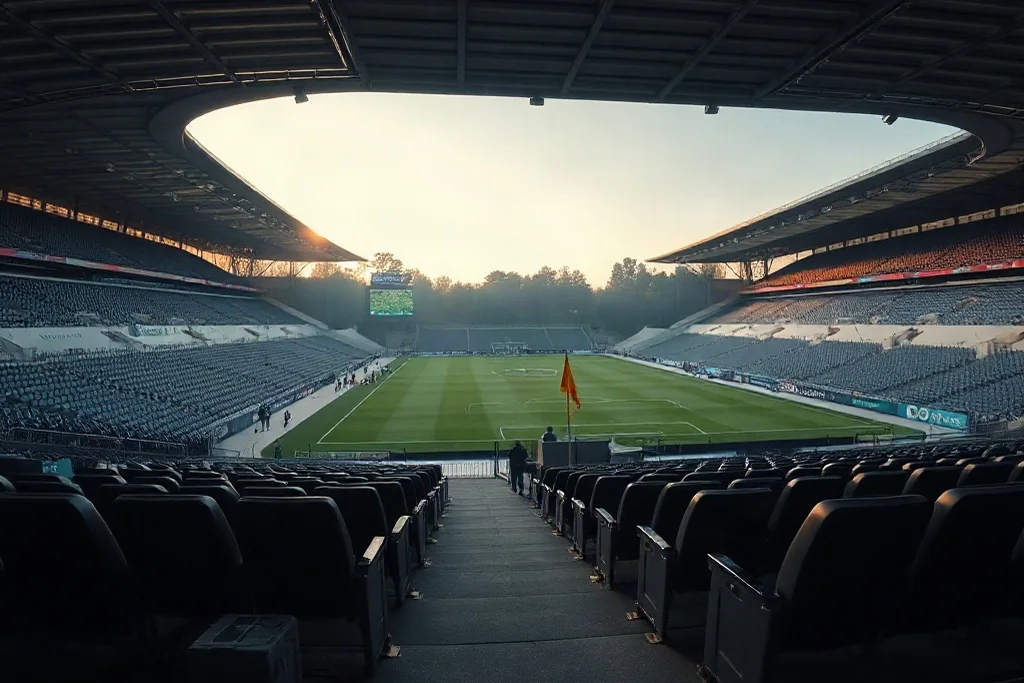
The Club World Cup was reshaped from a short annual gathering into an enlarged tournament with a group stage and a full knockout bracket. The change turned a brief showcase into a competition with the structure of a major international event, and it brought with it a new set of rules about who qualifies and how the rounds connect.
This guide sets out how the expanded format works: the number of clubs, how they are divided, how the group stage feeds the knockout rounds and what the qualification paths look like.
The size and shape of the tournament
The expanded Club World Cup brings together thirty-two clubs from the world's confederations into a single event. The clubs are divided into groups, and each group plays a round-robin of matches. The top finishers in each group advance to a knockout stage, which runs as single-match rounds from the first knockout round to the final.
That shape is deliberately familiar. A group stage followed by a straight knockout bracket is the standard architecture of a world tournament, and applying it to clubs gives the competition a rhythm that players and viewers already understand.
How clubs qualify
Qualification is allocated across the confederations rather than earned through a single global league. The main routes are continental champions, who qualify by winning their confederation's leading club competition, and ranking-based places awarded according to a confederation's performance and a club's record over a set period.
Host-nation representation and a limit on the number of clubs from any single country keep the field international. The mechanism is a quota system: each confederation receives a fixed number of places, and the clubs that fill them are decided by championship results and ranking criteria within that region.
From groups to the knockout bracket
In the group stage, points and tiebreakers decide who advances. The group winners and runners-up move into the knockout rounds, where the competition switches from a league of results to a bracket of single elimination matches. Once the bracket is set, every match is decided on the day, which is where the format concentrates its drama.
The bracket is seeded so that the strongest group-stage records are rewarded with favourable paths. That seeding is the link between the group stage and the knockout rounds: performance in the groups does not merely decide who advances, it decides where they enter the bracket.
What the format means for analysis
A tournament of this shape mixes a small sample of group matches with single-elimination football. In group stages, teams can afford to manage risk across several matches; in knockout rounds, a single bad afternoon ends the campaign. Analysts reading the competition have to keep those two regimes separate, because the incentives change completely at the bracket line.
It also spreads the data across confederations that rarely meet, which makes the tournament an unusual opportunity to compare styles from different football cultures on the same stage — and an unusually risky one for anyone drawing firm conclusions from a handful of matches.
Structural elements of the expanded tournament
The format is defined by a small set of mechanical features.
- Thirty-two clubs drawn from every confederation.
- A group stage played as a round-robin.
- Group winners and runners-up advancing to the knockout rounds.
- Single-match elimination from the first knockout round.
- Seeded bracket placement rewarding group-stage results.
- Confederation quotas rather than a single global qualifying league.
Round by round through the tournament
How the competition moves from the group stage to the final.
| Stage | Format | How clubs advance |
|---|---|---|
| Group stage | Round-robin within groups | Points and tiebreakers |
| First knockout round | Single match | Group winners and runners-up |
| Later knockout rounds | Single match | Winner progresses in the bracket |
| Final | Single match | The last two clubs standing |
A format is a set of incentives. Change how many clubs advance, and you change how much risk a team is willing to take in the matches that decide it.
Reading a competition honestly means reading its rulebook first. Points, tiebreakers and qualification routes are definitions, and definitions decide outcomes as surely as goals do.
Formats trade fairness against drama. A pure double round-robin is perfectly even and very long; a knockout bracket is short and thrilling but rewards a single afternoon over a season.
When a format changes, historical records lose some of their comparability. A points total earned against three familiar opponents is not the same object as one earned against a varied field.
The calendar is part of the format. More matches mean more rotation, more fatigue and more noise in the data a reader later tries to interpret.
A world tournament in club form
The expanded Club World Cup takes the architecture of an international tournament and applies it to clubs. Understanding the structure — quotas, groups, seeding and the bracket — is what makes the competition readable as it unfolds, and keeps a reader from confusing a group-stage table with a knockout bracket.
Read next
The Swiss-system Champions League explained
One league phase, eight games, one table: how the Swiss-system format works and how qualification is decided.
Points, tiebreakers and how tables are decided
Three points for a win, goal difference and the ordered tiebreakers that decide who finishes above whom when records are level.
Seeding and knockout draws: how brackets work
Seeds, pots, restrictions and bracket paths — the mechanics behind a cup draw and a knockout schedule.